AV Research
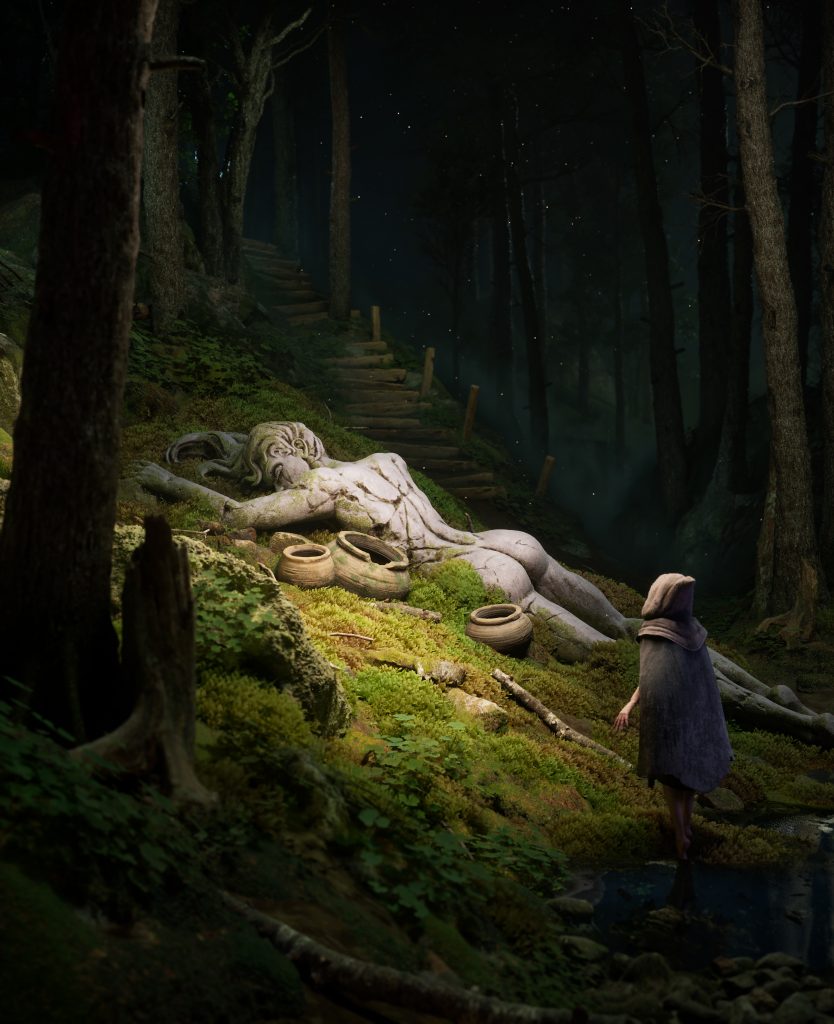
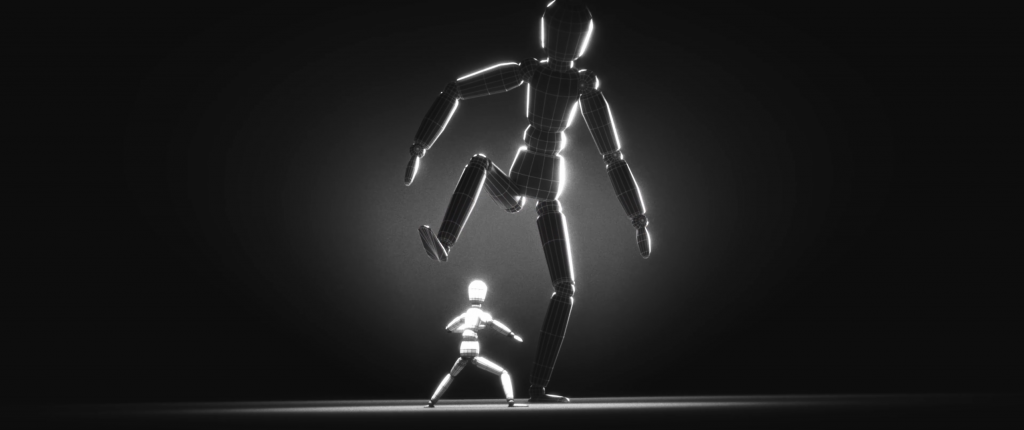
Therefore, I wanted to explore through this work “how time flows, conflicts and integrates between nature and man-made objects”. The forest becomes a symbol – it is the embodiment of time; while those artificial marks represent the brief existence of humans.
The work is not merely about decline or regeneration; rather, it is about accepting the power of time and understanding the impermanence of life. It is a visual narrative about “how time changes everything”, and also a form of self-dialogue: In the face of time, what exactly can we leave behind?
Inspiration
This year I am 25 years old. Suddenly, I realized that if the average human lifespan is a hundred years, I have already completed one quarter of my life.
This feeling brings about a peculiar sense of time – for the first time, I clearly realized that time does not wait for anyone. It is neither an enemy nor a friend, but a silent yet persistent force. It does not change according to human will and constantly propels everything forward, eliminating form and reconstructing meaning.
When I thought of this, I began to observe nature – forests, trees, wind, light. They seem to understand time in a much larger way: trees record time as they grow, and the tree rings are a tangible memory; while fallen leaves, weathering, and rebirth are how nature plays out the cycle of time. In contrast, the objects created by humans – metals, concrete, machinery – appear short-lived and fragile. They cannot escape the takeover of nature.
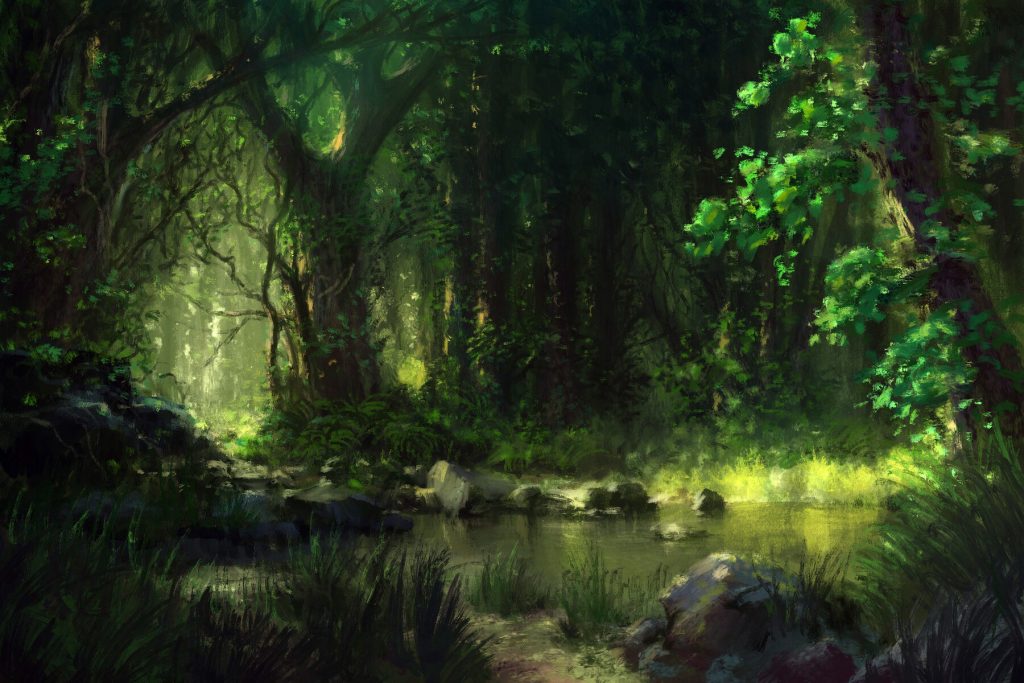
In the flow of time, nature rewrites human traces with its own algorithm.
Nature & Seasonal References
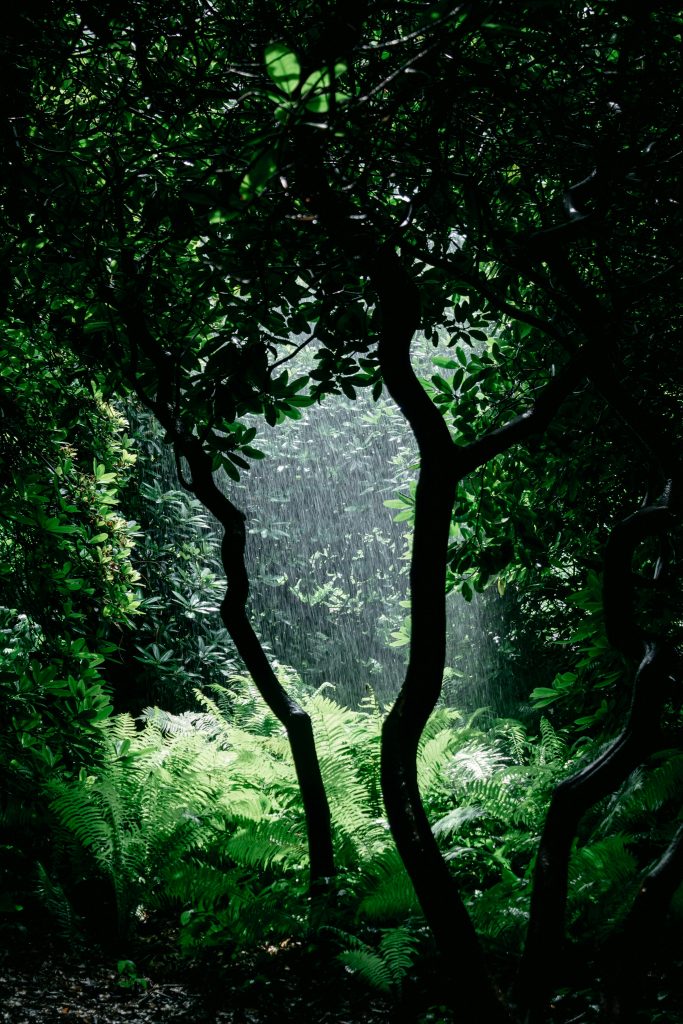
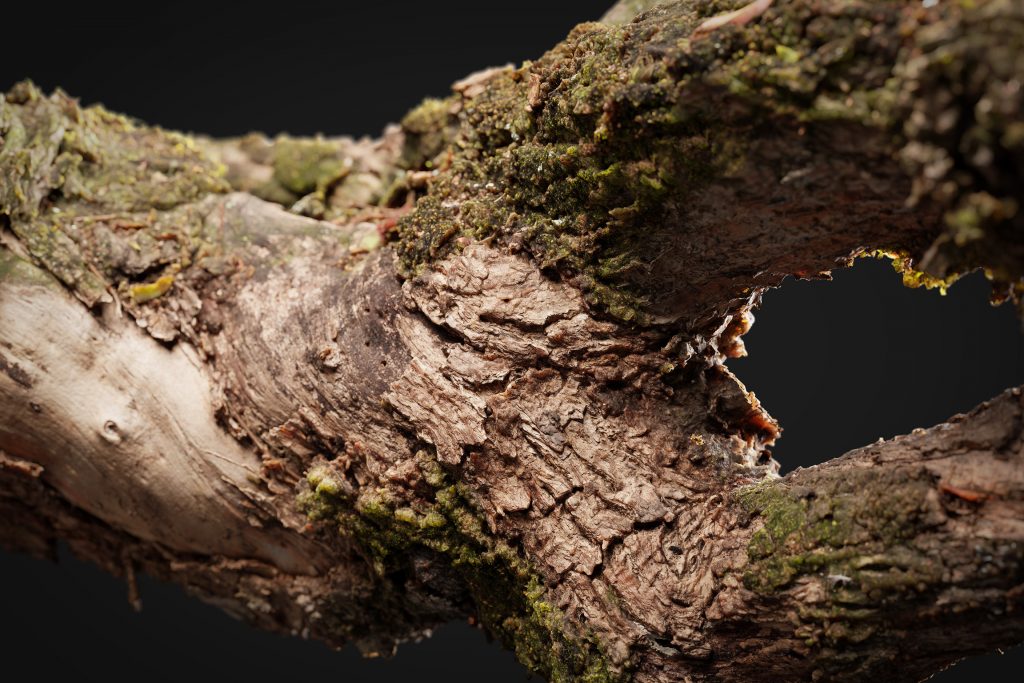
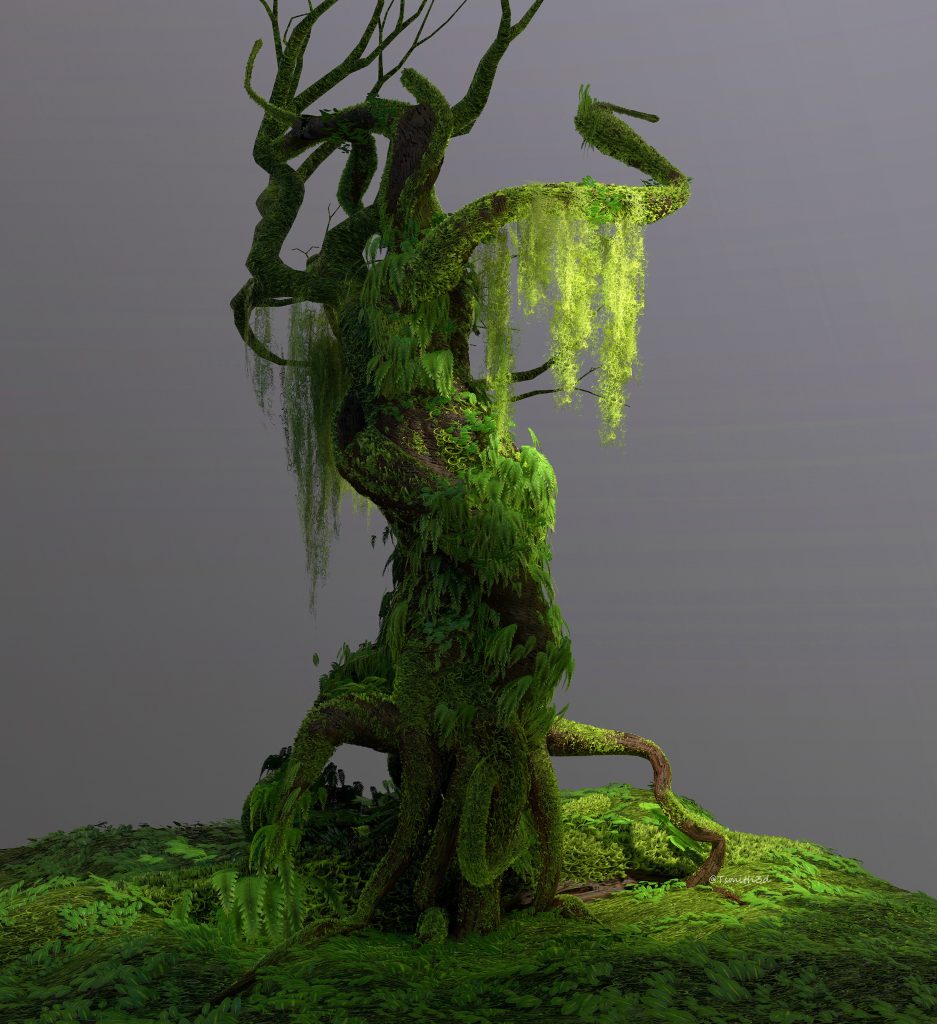
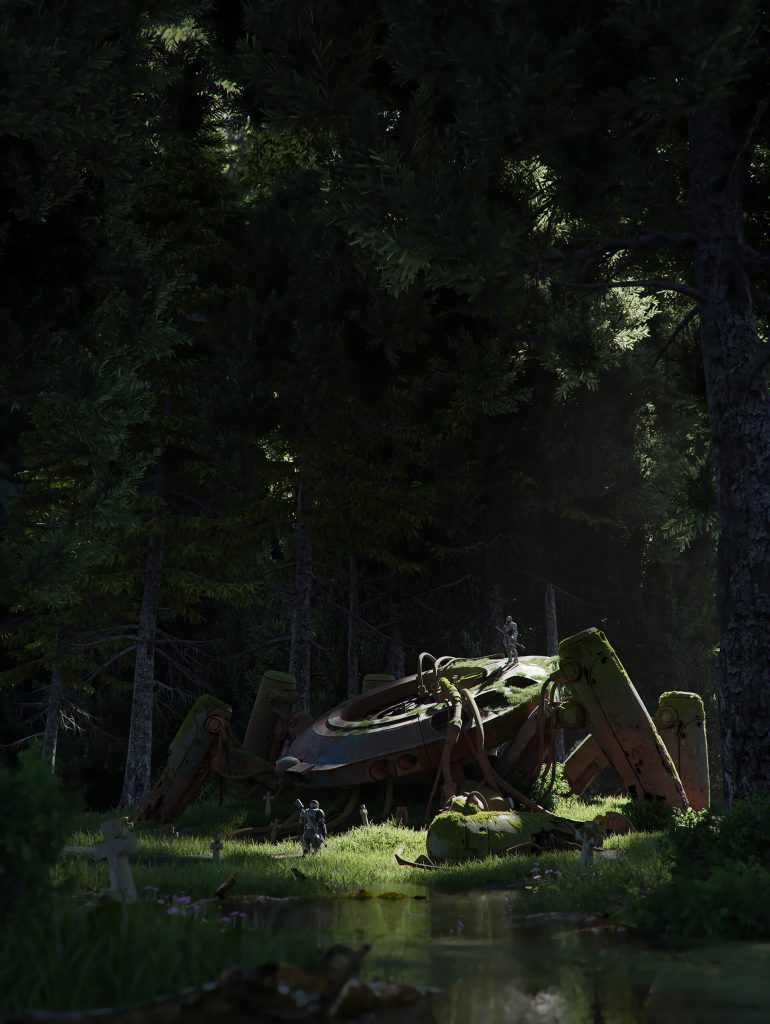
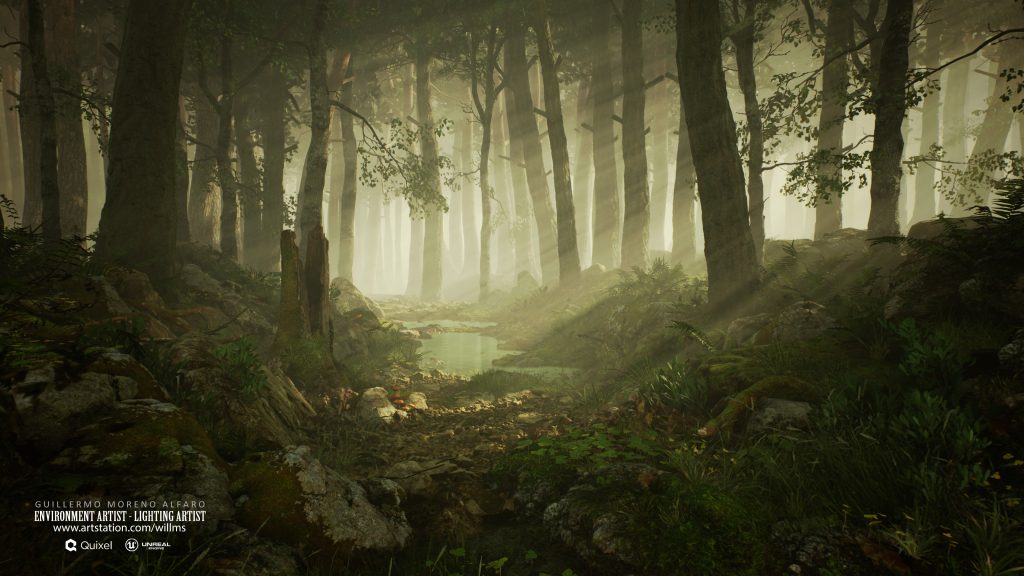
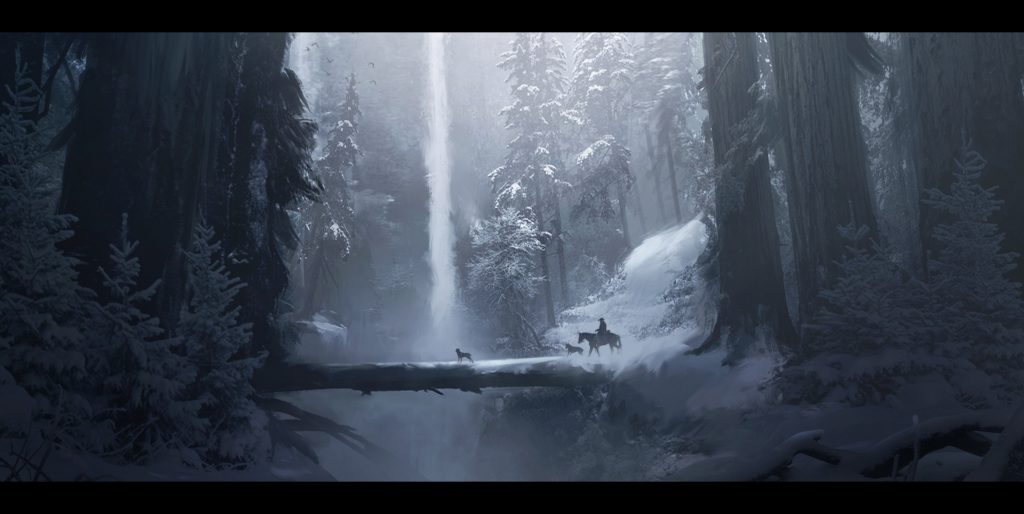
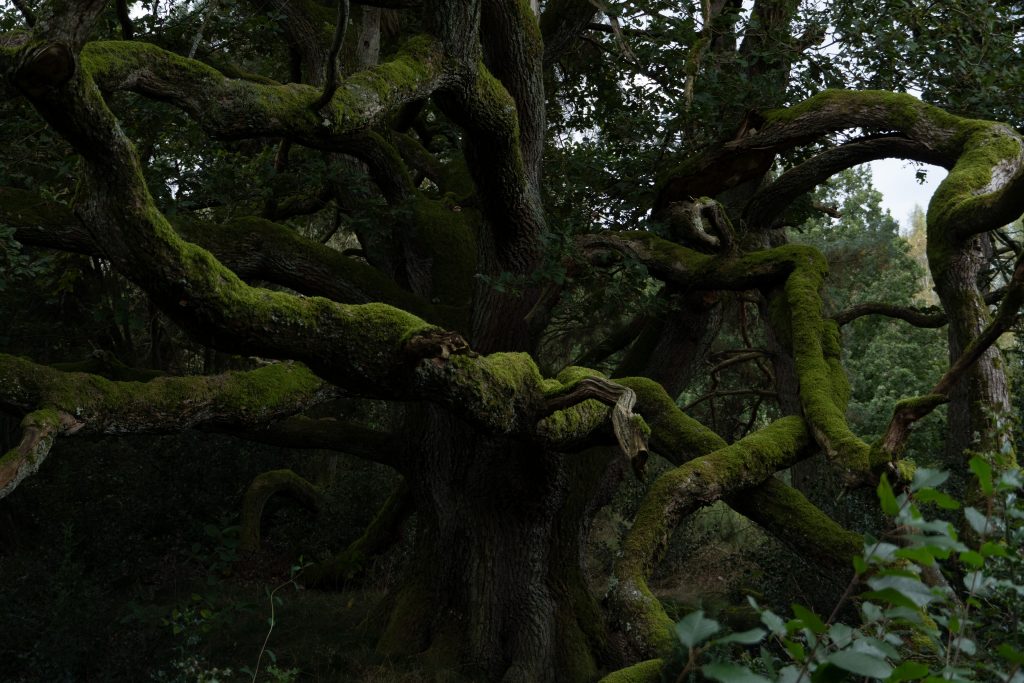
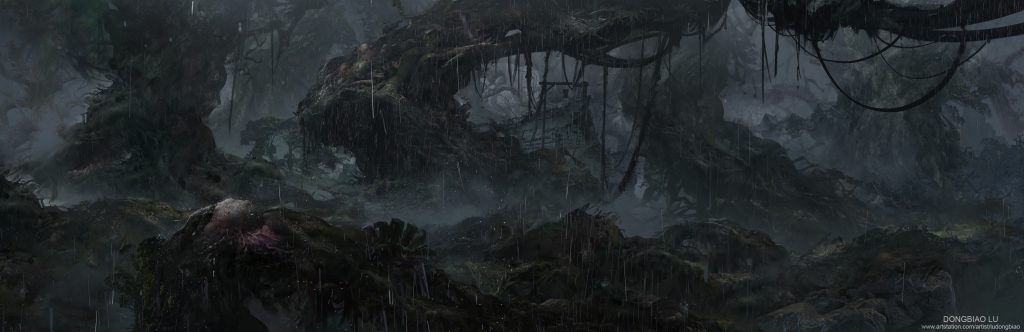
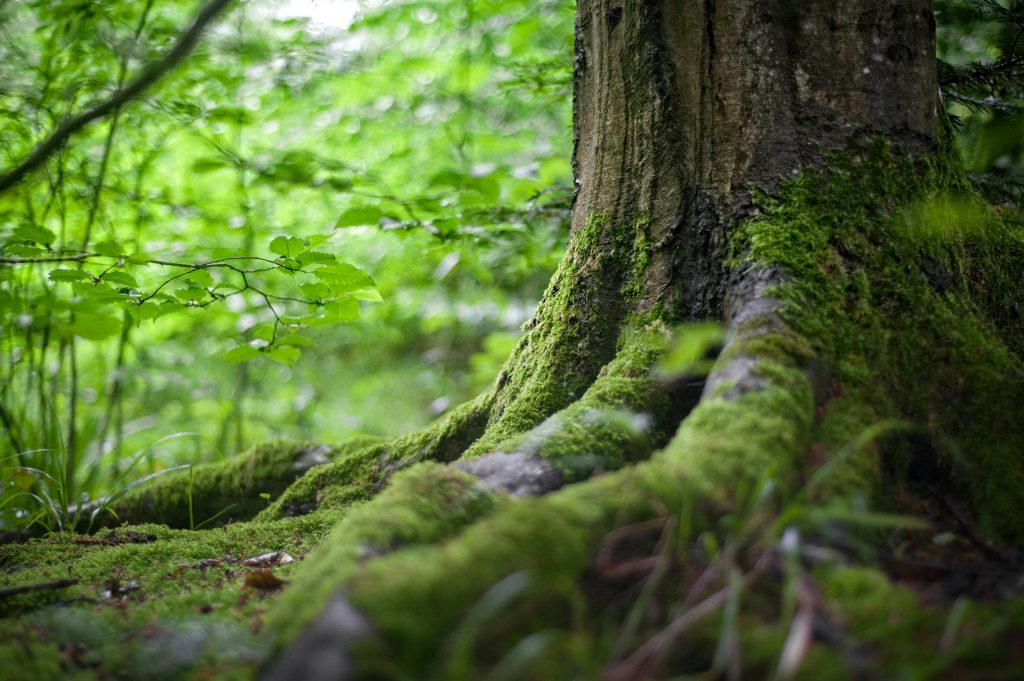
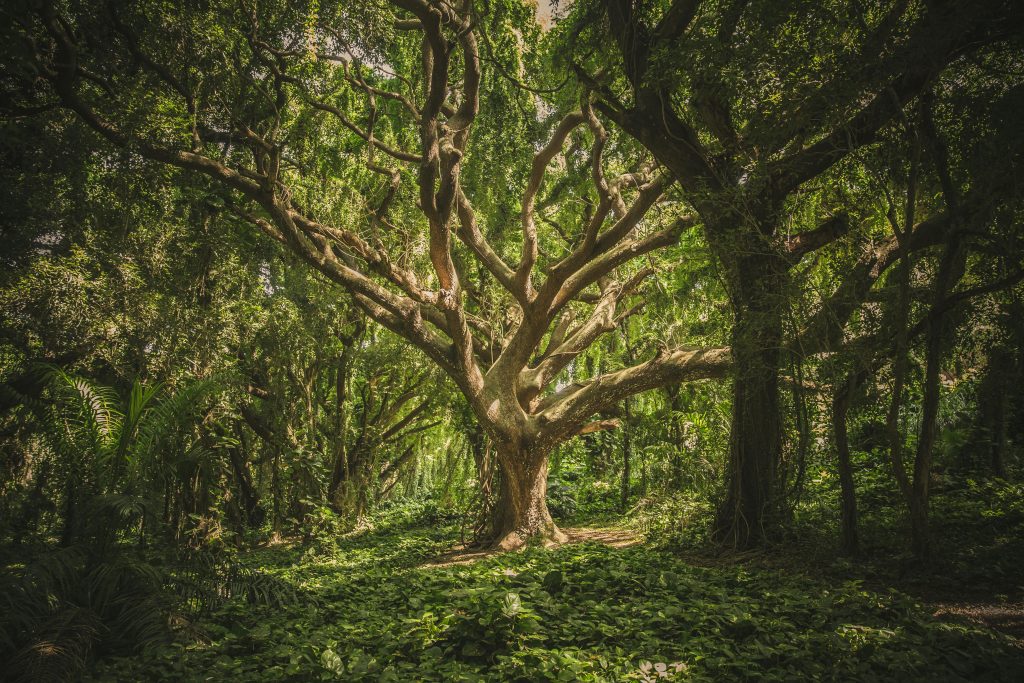
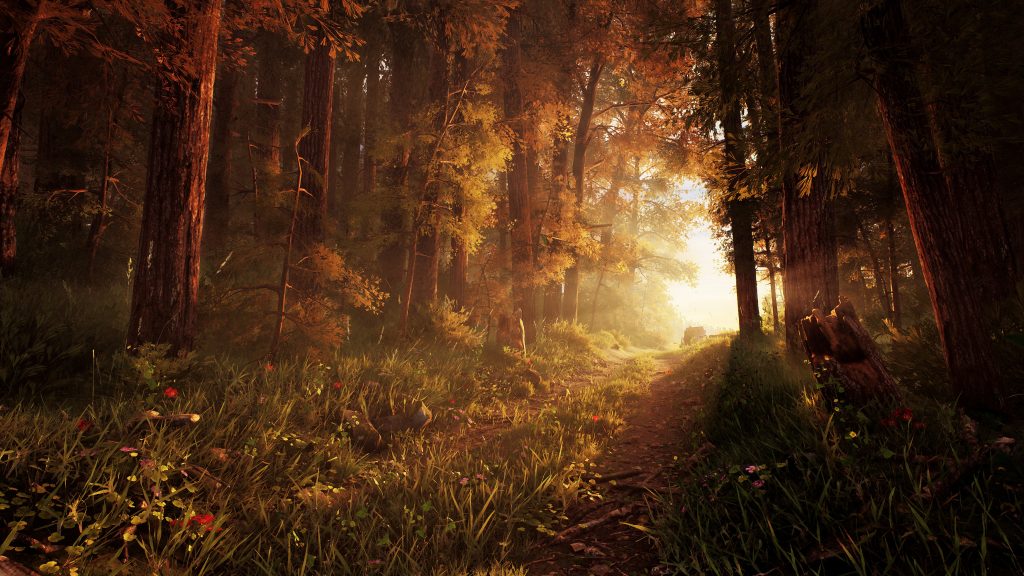
I chose the forest scenes of spring, summer, autumn and winter as visual references, hoping to express the cycle of time and the continuation of life through the changes of nature over time. The budding of spring, the flourishing of summer, the withering of autumn and the silence of winter symbolize the four stages of time, and also imply the flow of life and memory. During these seasonal transitions, trees become the most time-sensitive entities – their growth rings, textures, and the postures of their branches and leaves all record the traces of time. I also collected a large number of details of tree trunks and tree bark as references, hoping to let the audience feel the marks of time left on the surface of the objects through the changes in materials and light. These reference images are not only visual materials, but also the foundation of my research on “how time is seen in nature”.
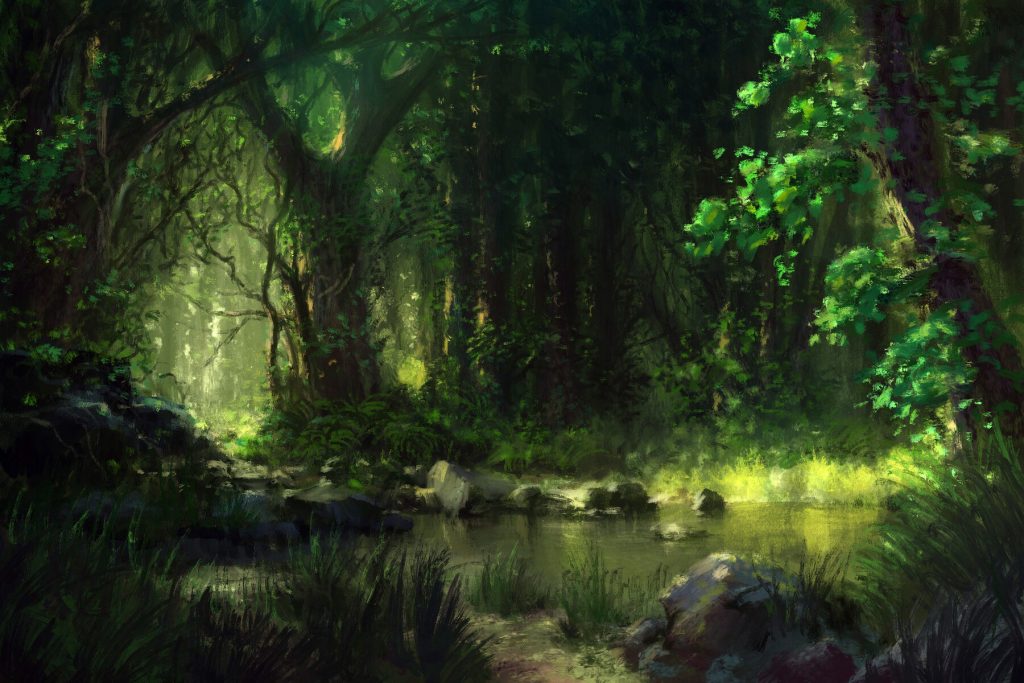
TEMPORAL GROVE
Eastern Aesthetic : Cycles, Impermanence, and the Poetry of Time
In Temporal Grove, Eastern aesthetics form the foundation for how I visualise time, decay, renewal, and the quiet dialogue between nature and man-made objects. Drawing from East Asian philosophies of impermanence and cyclical existence, time is not treated as a linear progression but as a series of returning rhythms. This understanding directly shapes my decision to depict the four seasons—and their distinct weather conditions—as the core structure of the film. Spring’s bright morning, summer’s stormy night, autumn’s sunset glow, and winter’s heavy snowfall are not merely environmental choices; they are visual metaphors for different emotional states within the greater cycle of life.
In Eastern thought, each season carries its own symbolic layer:
Spring represents birth and clarity, which is why I chose a luminous morning;
Summer embodies intensity and conflict, expressed through a violent rainstorm at night;
Autumn suggests reflection and soft decline, captured by the warm fading light of dusk;
Winter signifies stillness and purification, depicted through enveloping snow.
These atmospheric changes allow time to be felt rather than stated, echoing the Eastern idea that transformation is subtle, circular, and interconnected.

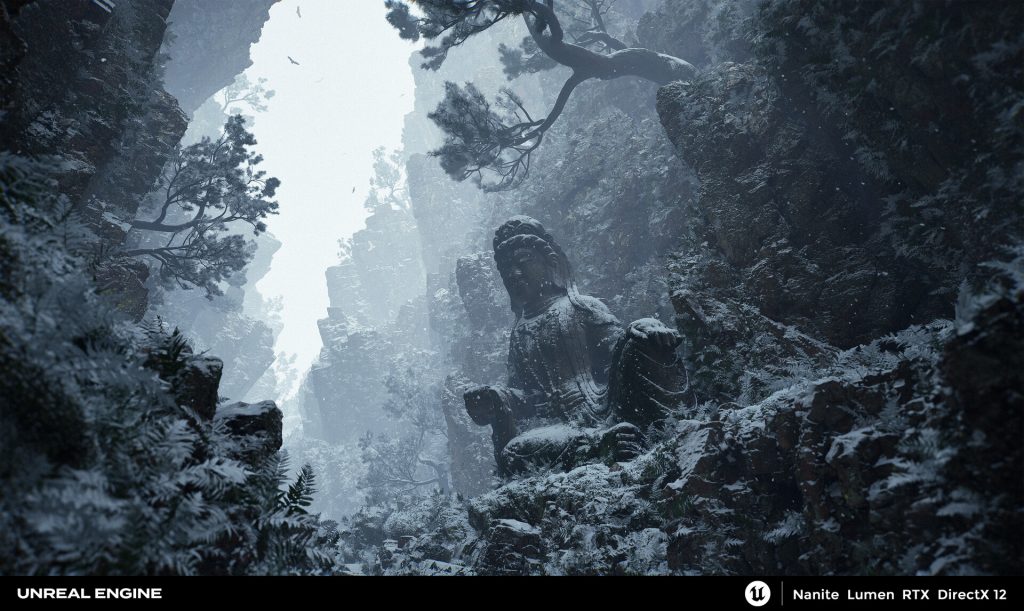
References to the same scene in different seasons that align with my views
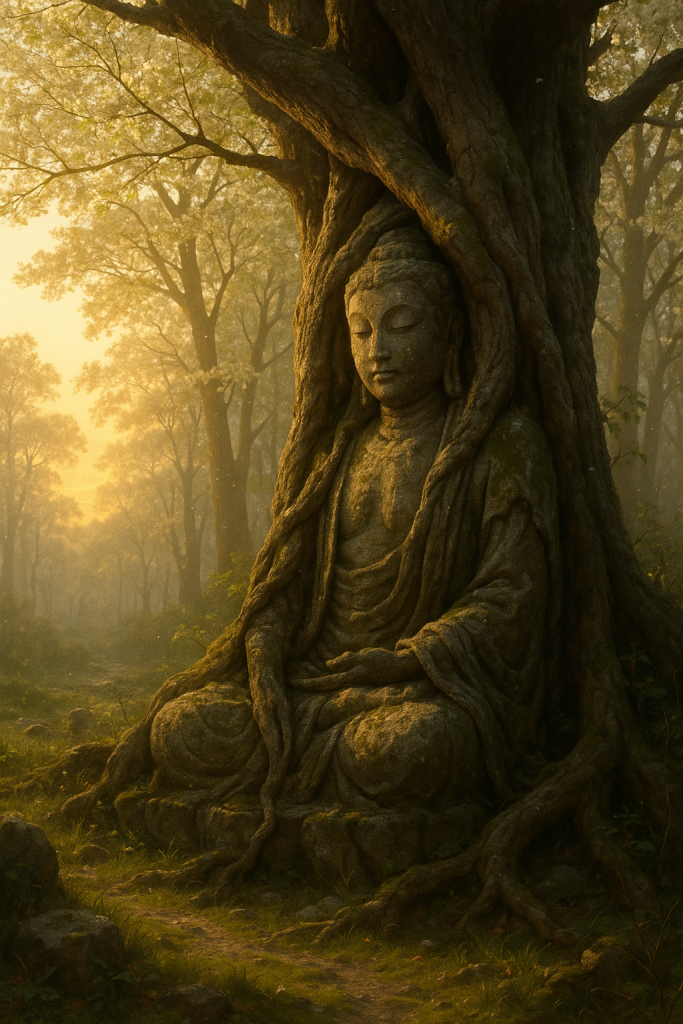
The Bodhisattva statue serves as the spiritual axis within this cycle. Rather than portraying it as a pristine sacred object, I depict it partially eroded and gradually embraced by the tree’s roots. This reflects the belief that nothing— not even symbols of eternity—exists outside the flow of time. Yet the statue’s serene posture evokes inner calm amid continuous change, suggesting acceptance rather than resistance.
The interaction between the tree, the weather, and the sculpture embodies a core Eastern insight: nature does not destroy; it absorbs. Human traces are softened and re-harmonised with the environment. Through this lens, the seasonal and climatic variations in Temporal Grove become a poetic expression of time’s gentle yet inevitable power.
Preliminary concept map generated by GPT
Pre-Production
Concept Development
In the initial concept, my project focused on the relationship between nature and human traces. However, as I delved deeper into the themes of time and existence, I wanted to bring in a more spiritual dimension. The Eastern aesthetic understanding of impermanence, cyclic renewal, and inner stillness deeply resonates with my reflections on time. Therefore, I decided to introduce a Bodhisattva statue as the visual centerpiece, partially weathered and gradually embraced by nature. The statue symbolizes humanity’s pursuit of eternity while embodying serenity and compassion in the face of time’s inevitability. As trees grow and seasons change, the sculpture becomes one with the surrounding environment, blurring the boundary between the artificial and the natural. Through this fusion, I aim to express the poetic philosophy within Eastern thought — that time is cyclical, and in disappearance lies renewal.
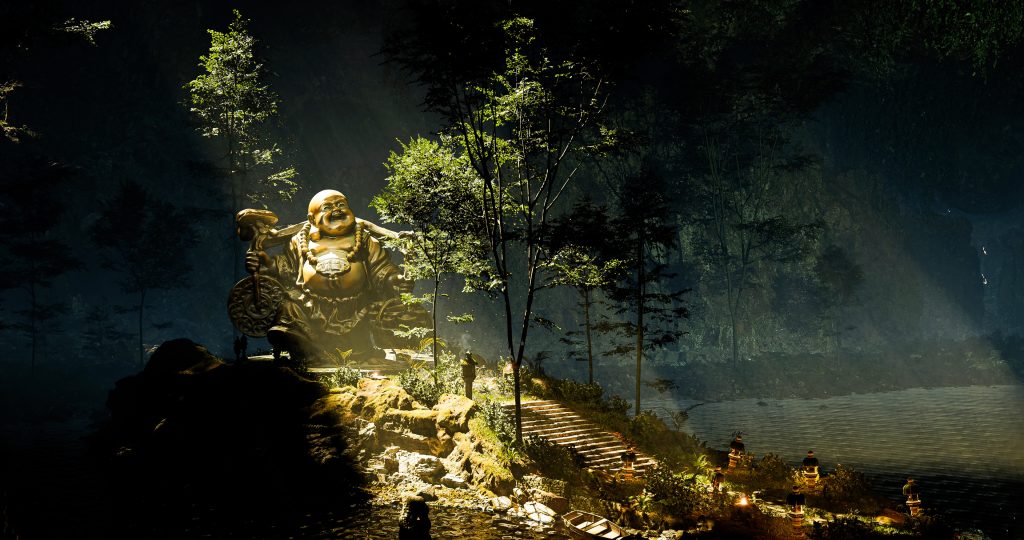
The feeling similar to that shown in the picture
Initial layout and lens design
During the layout stage, I decided to base my camera setup on an animation from the 7th 3D Community Challenge. The original sequence features a smooth camera motion with elegant spatial transitions and a strong sense of depth, which aligned perfectly with my concept of expressing the passage of time through movement. After analyzing the camera path, I chose to adapt and modify it for my own project. While keeping the general flow of the original animation, I made subtle adjustments to the speed, rhythm, and pauses, allowing the motion to better reflect the contemplative and poetic tone of my narrative.
In my version, the camera travels slowly through a forest environment, where layers of foreground trees serve as visual transitions between different times of the year. As the camera moves forward, changes in lighting, color palette, and foliage density suggest the progression from spring to winter. This approach not only retains the cinematic smoothness of the original animation but also transforms it into a storytelling device that visualizes temporal change.
By reinterpreting an existing layout rather than starting from scratch, I was able to focus more on atmosphere, rhythm, and emotional resonance. The result is a simple yet layered camera movement that leads the viewer through a continuous experience of time—quiet, immersive, and ever-changing.
Main Tree Creation
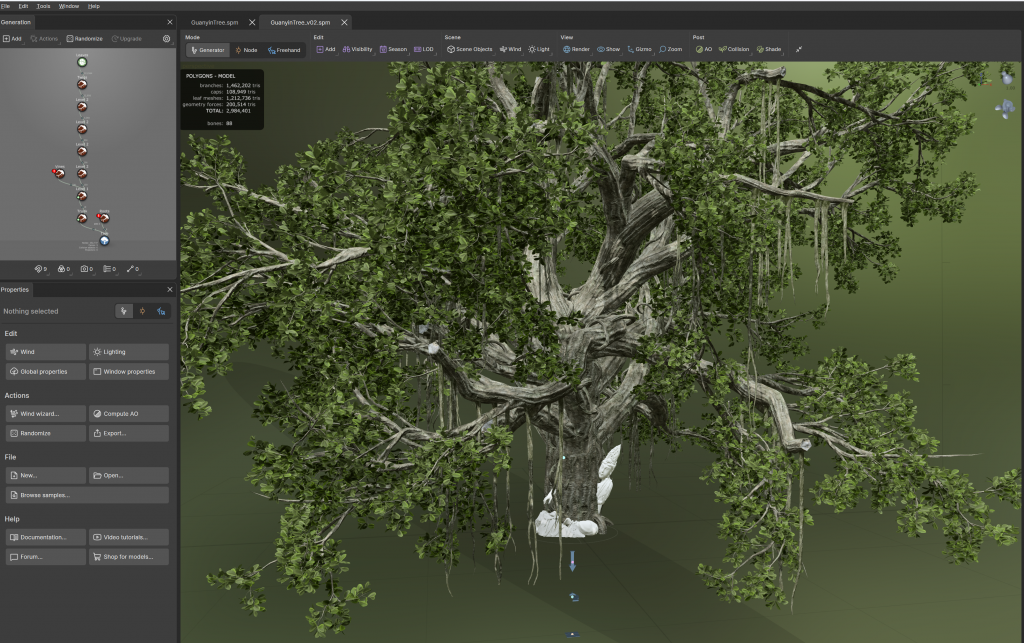
After entering the production stage, I began to build the main scene model in SpeedTree. The focus of this stage was to create the core visual element of “the Guanyin statue entwined by trees”. The model of the Guanyin statue was obtained from online resources. After importing it, I performed appropriate topological optimization and material adjustments to make it more in line with the realism and narrative atmosphere of the overall scene. In contrast, the tree part was entirely created by me in SpeedTree. Through parametric growth and control of branch and leaf distribution, I simulated the randomness and directionality of natural growth.
I attempted to make the branches of the trees correspond to the posture of the statue in terms of form: the entire thick tree enveloped the entire statue, exposing only parts of the body, as if nature was “embracing” time and faith in its own way. This wrapping is not only a visual compositional relationship but also symbolizes the integration of nature and human spirit. Through the growth of the trees, I hope to convey the passage of time and the acceptance of artificial objects by nature, as well as the cruelty of time. Next, I will import the model into Houdini to continue the construction of lighting, materials, and the overall atmosphere, in order to achieve that Eastern poetic sense of “time standing still yet still flowing”.
Environment Planning
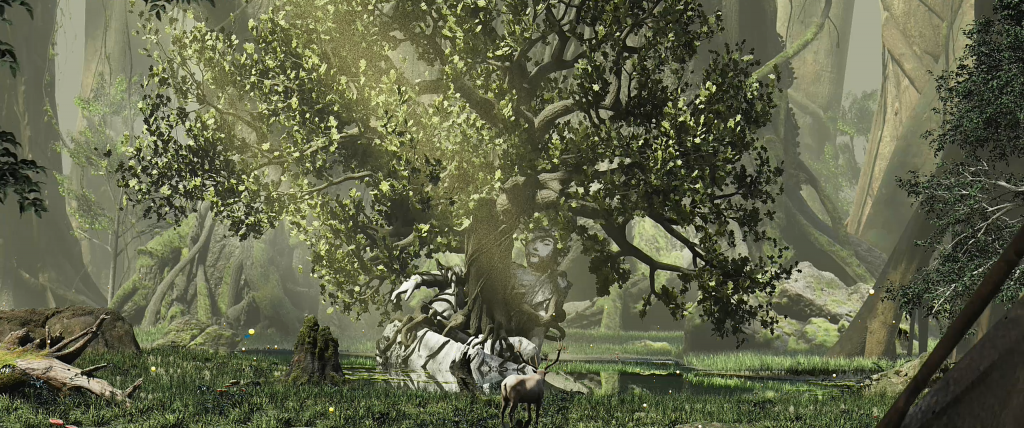
During the Environment Planning stage, my main task was to establish the ecological structure of the entire forest space and the role of seasonal changes in the narrative. The entire scene revolves around the Guanyin statue surrounded by trees. Therefore, all the environmental designs are centered around “the sense of time in nature” and “the cycle of life”. From the terrain, the density of trees to the pathways of light, I aim to narrate through the environment itself a poetic process of “time swallowing artificial things but re-giving them meaning”.
The concept of the four seasons also plays a significant role in my project. It is not only a visual change, but also symbolizes the passage of time. In the upcoming summer, autumn, and winter versions, I plan to use changes in light direction, air humidity, vegetation growth and decline, and color temperature to make this forest present different personalities and rhythms, making seasons become the structural language in the visual narrative.
The entire environmental planning stage laid the crucial foundation for the subsequent shots, materials, and compositing, making the scene not just a space, but also a time journey that can be “read”.
During the early development stage of this project, I incorporated AI-generated moodboards as a way to quickly explore the emotional tone, lighting atmosphere, and seasonal characteristics of the environment. Since my initial concept focused more on visual presentation than narrative, I needed a flexible method to experiment with different moods without committing to full 3D production too early. AI became an efficient tool for this stage, allowing me to generate variations of color palettes, environmental compositions, and lighting scenarios for all four seasons within minutes.
These moodboards helped me clarify the contrast between Spring’s softness, Summer’s intensity, Autumn’s warmth, and Winter’s stillness. They also provided visual inspiration for the Bodhisattva statue, forest density, and the overall spiritual ambience I wanted to capture. Rather than copying the AI outputs, I used them as conceptual guides — a starting point to shape my own artistic decisions in Houdini and SpeedTree.
Through this process, I realized that AI’s value lies not in replacing creativity, but in accelerating ideation. It allowed me to iterate freely, make quicker aesthetic decisions, and enter the production stage with a clearer emotional direction. Ultimately, the AI moodboards became an integral part of refining the visual identity of the entire project.
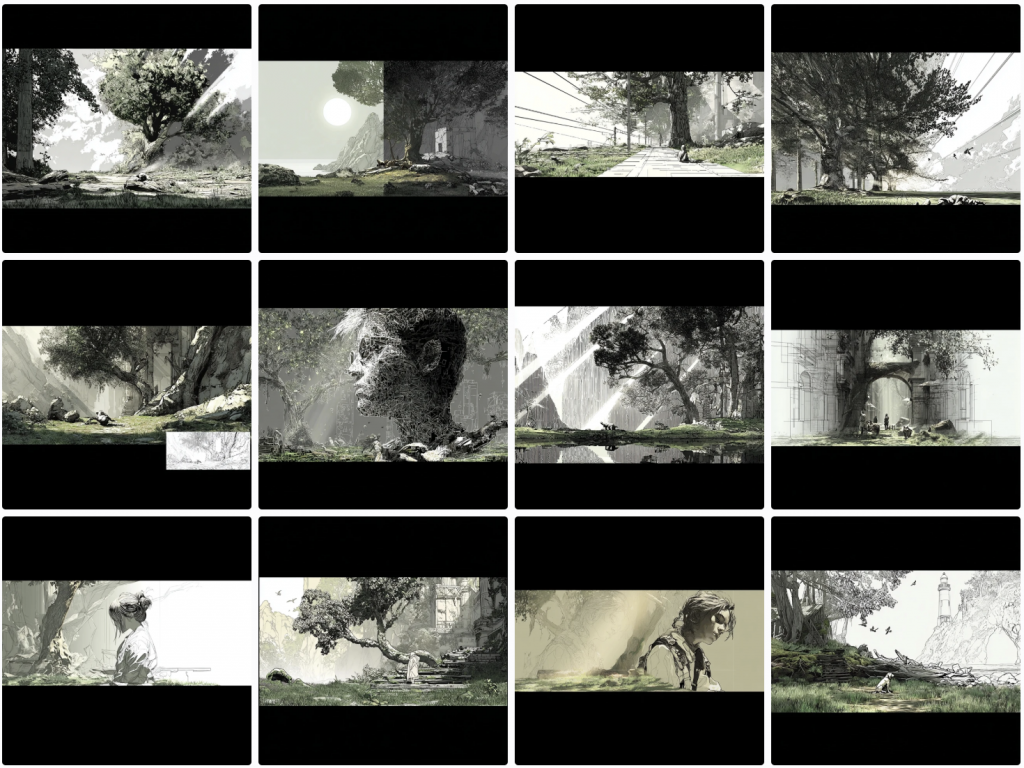
Using the Made Journey to create the Spring Moodboard versions
Experimentation
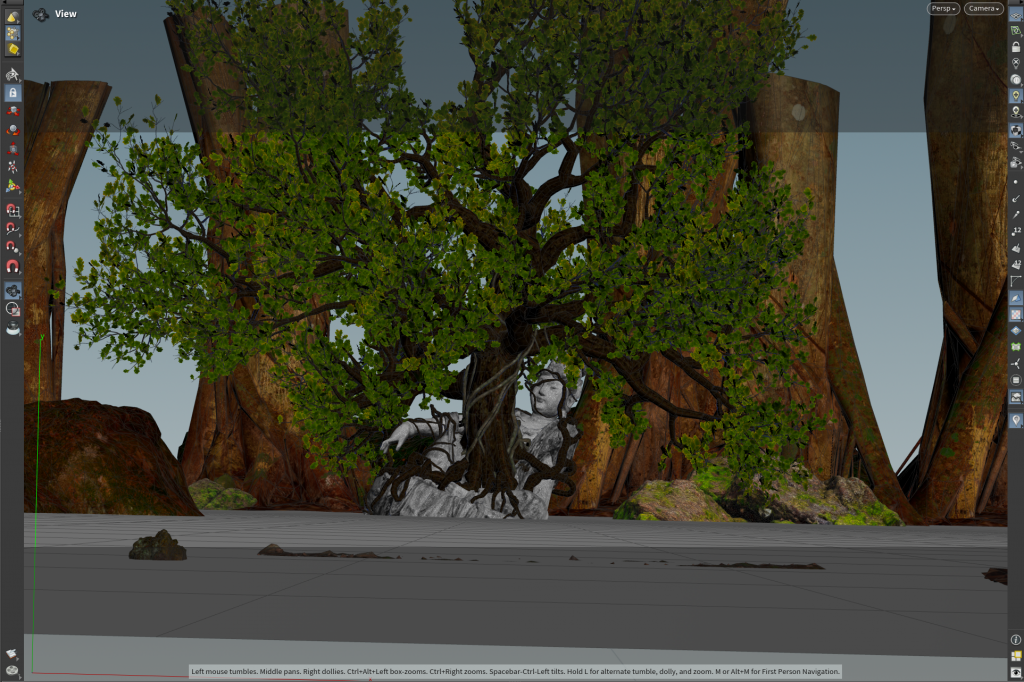
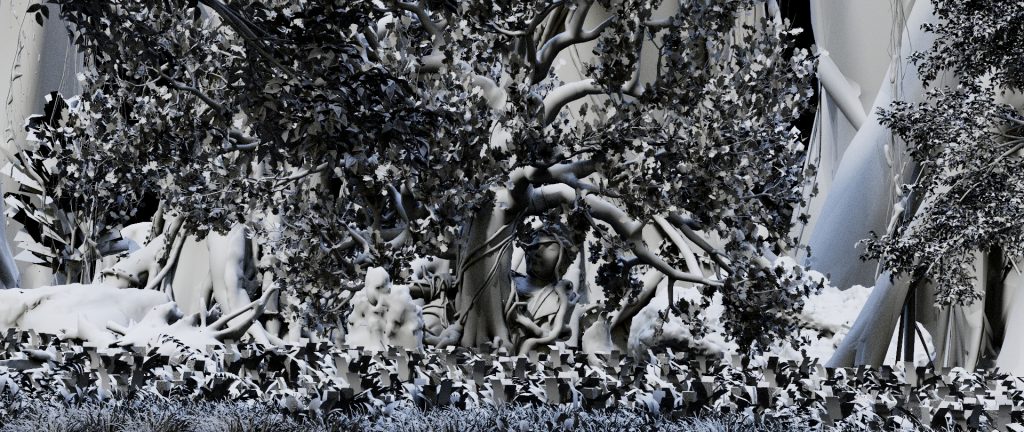
Final white model layout
Iterating the Leaves, Shaping the World: A Layout Built Through Problem-Solving
During the layout stage, I began integrating the Bodhisattva statue and the tree models I created in SpeedTree into the overall environment. This process was not entirely smooth — the main tree model had an extremely high polygon count due to the detailed vines and leaf geometry, which caused significant lag and instability in my scene. To solve this, I first removed the vine leaves and optimized the trunk and branch structure before importing it into Houdini.
However, when I attempted to export the leaves from SpeedTree into Houdini, I encountered repeated export failures — the geometry and UV data were not recognized properly. After several tests, I decided to recreate the leaves directly in Houdini using procedural instancing. This approach not only solved the technical issue but also gave me more control over the leaf distribution and animation later in the simulation stage.
Through this process, I learned how to balance visual ambition with technical feasibility, and how problem-solving can become part of the creative flow. The final layout not only established a strong narrative foundation but also reflected the patience and adaptability required in the making of a VFX environment.
From Karma to Mantra: A Lesson in Patience
- After finalizing the placement of all the assets in the scene, I moved on to the texturing and shading stage. This part was meant to bring the environment to life — assigning materials to the rocks, statue, tree bark, and ground elements to create a cohesive atmosphere. However, the process turned out to be far more challenging than expected.
- Initially, I planned to render the scene using Karma inside Houdini Solaris. While Karma offers physically accurate lighting and good integration with USD workflow, I quickly realized that it wasn’t stable enough for my large-scale environment. The renderer kept crashing whenever I tried to preview or output high-resolution frames, especially with dense vegetation and displacement maps.
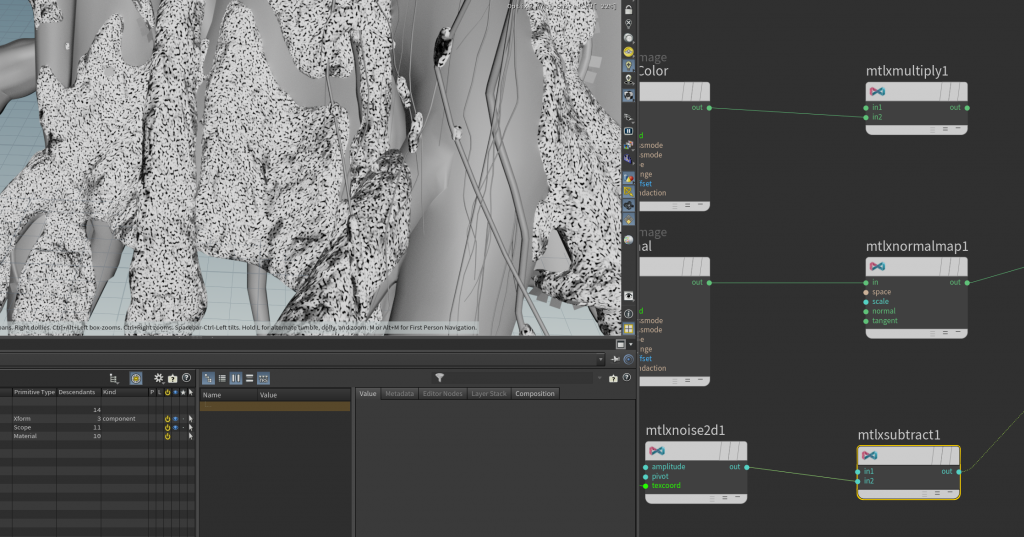
The picture above shows that I was creating a procedural texture in Karma. However, the resulting scene was too large, causing the program to crash frequently.
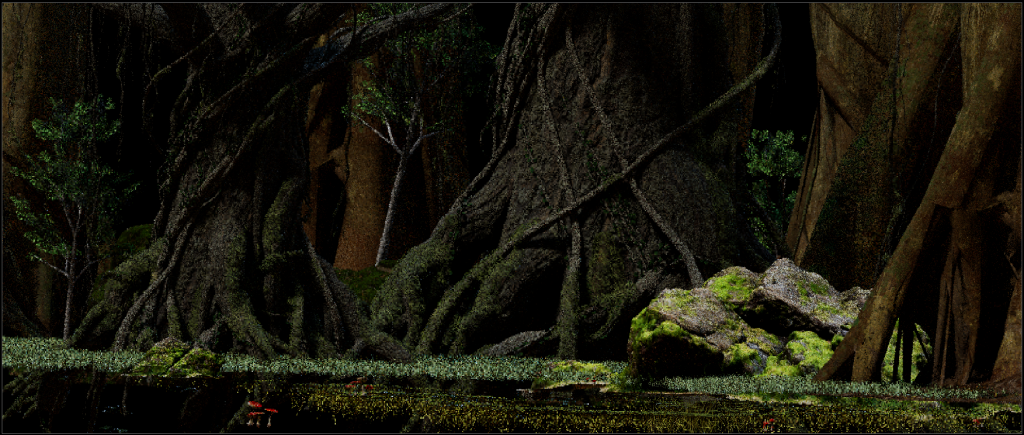
This picture shows the result of rendering with the mantra renderer after I switched to it. The materials were not adjusted, but at least the rendering was completed.
- After several attempts and system restarts, I decided to switch back to the Mantra renderer, which is slower but more reliable in handling complex geometry. Unfortunately, this meant that all my shader networks had to be rebuilt from scratch — every material connection, displacement node, and texture map needed to be relinked manually. It was honestly exhausting and time-consuming, but I treated it as part of the learning process.
- In the end, I managed to complete the texturing workflow successfully. The new setup under Mantra gave me consistent results and more predictable renders. Although the technical setbacks were frustrating, they pushed me to better understand the rendering system and develop a more organized material workflow for future projects.
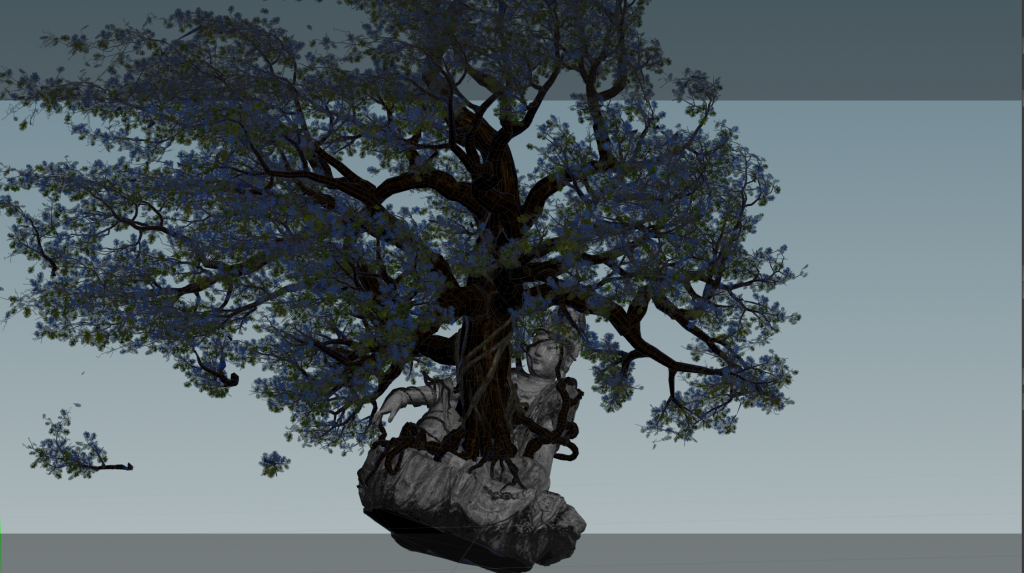
Final tree calculation result
Tree Simulation Challenges
During the tree simulation stage, I originally planned to create a more complex destruction effect for the scene: making the tree trunks break and collapse under external forces, in order to enhance the dramatic tension of the entire scene. However, during the actual operation, I found that this idea was far more difficult than expected. Tree trunks, as high-density and voluminous structures, require stable rigid body behavior, internal force simulation, and interaction with leaves and branches, which makes the simulation extremely costly. Not only does the calculation time exceed the controllable range, but also frequent breakdowns, unstable constraints, and simulation failure to converge occur.
Under the constraints of both technical difficulty and project time, I ultimately decided to abandon the original destructive route and instead seek a more controllable technical alternative. After some experimentation, I switched to using Wire Solver to drive the tree structure. By treating the branches as flexible linear objects for simulation, I achieved a lighter and more stable dynamic behavior. Since Wire Solver is better suited for depicting details such as branch swaying and local fractures, I also adjusted my creative approach accordingly: I removed the tree trunk collapse effect and instead focused on the local fractures of the branches. Although this choice weakened the originally envisioned massive destructive effect, it achieved a more reasonable balance between technical feasibility, stability, and artistic presentation.
This process made me realize that in VFX production, the technical approach must always be in harmony with the actual production conditions. Instead of stubbornly pursuing uncontrolled effects, it is crucial to adjust strategies appropriately and choose more stable solutions to ensure the successful completion of the project.
Design Process
SPRING
Houdini Stage
The production of the Spring scene began with a rough previz created in Houdini, where I blocked out the main shapes and camera movement using simple geometry. This helped me confirm the narrative language of the scene — the gradual reveal of the Bodhisattva statue and the prominence of the central tree. After finalizing the layout direction, I imported my SpeedTree models, including the statue-wrapping tree and additional vegetation. Due to the extremely high polygon count, I had to optimize the trunks and branches and later rebuilt all the leaves procedurally in Houdini to ensure stability.
Once the layout was locked, I moved into the texturing and shading stage. Initially, I attempted to render the scene using Karma, but the renderer became unstable with large-scale vegetation, frequently crashing during previews. Eventually, I switched to Mantra and rebuilt the entire material network from scratch. Although time-consuming, this allowed for more predictable results and consistent lighting behavior.

Main Reference
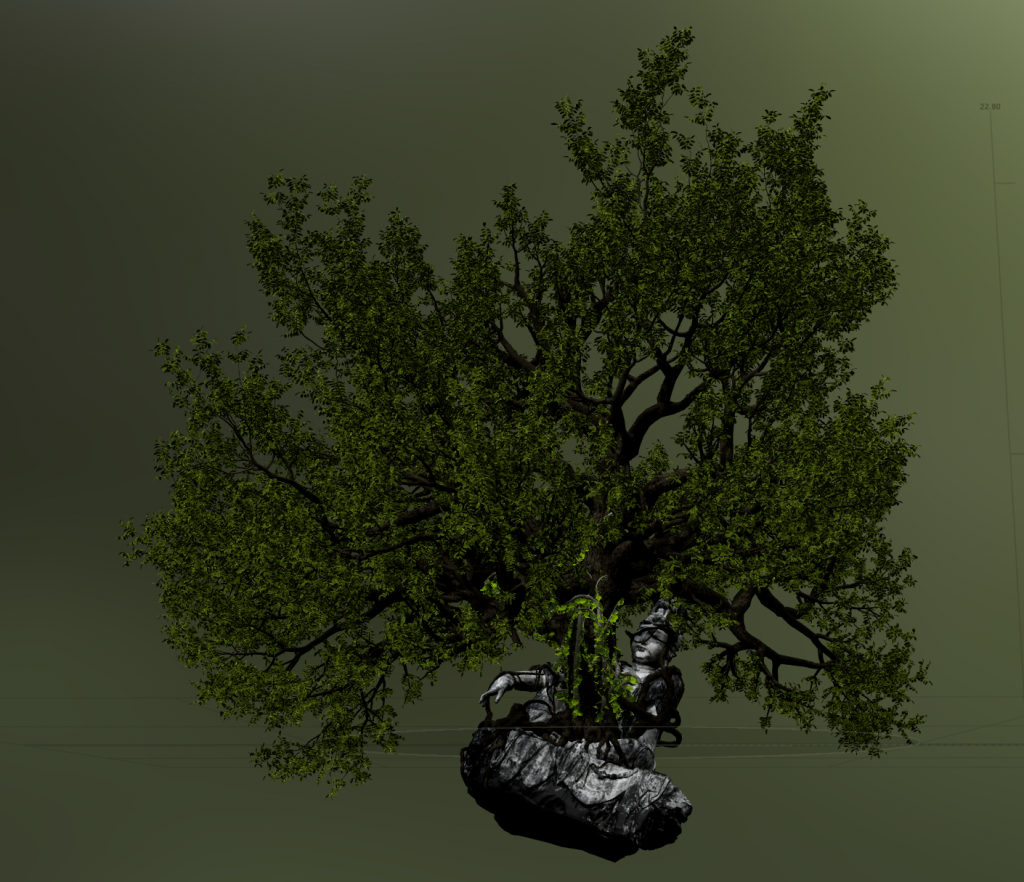
Main tree in SpeedTree

Nodes diagram in Houdini
Final Compositing
After finishing the rendering process, I moved into the compositing stage in Nuke, where I refined the overall look of the spring scene. I separated my renders into three main layers — foreground, main subject, and background — which gave me more flexibility for color correction and atmospheric adjustments. This layer-based workflow allowed me to fine-tune depth and lighting relationships without having to re-render the entire scene.
Originally, my plan was to include volumetric fog in the final render to enhance depth and mood. However, the fog simulation turned out to be too heavy for my computer to handle, frequently causing crashes and long render times. In the end, I decided to remove the fog layer entirely and instead focused on improving the composition through lighting and contrast. I also added a small deer in the foreground — a subtle but meaningful element that introduces life and motion into the otherwise still scene.
In Nuke, I spent considerable time adjusting the Tyndall effect (god rays) to ensure that the main statue remained the visual focal point. Through multiple iterations of color grading and subtle light adjustments, I achieved a calm yet luminous atmosphere that represents the spirit of spring.
Although some technical compromises were made, the final result feels complete and balanced. This stage taught me how to adapt creatively to limitations — turning technical constraints into aesthetic decisions.
Final Effect
SUMMER
Houdini Stage
The production of the Summer night storm scene in Houdini began by duplicating my base environment from the Spring setup, ensuring the spatial layout and assets remained consistent across seasons. I then shifted the entire lighting and atmosphere toward a darker, high-contrast nighttime look. The first major task was constructing the storm elements. I created the rain using a particle system, controlling droplet velocity, turbulence, and motion blur to achieve a heavy summer downpour. To simulate violent wind, I applied noise-driven velocity fields to the vegetation and drove the main branches using the Wire Solver, giving the scene an intense sense of movement and instability.
Lightning effects were designed using animated emissive geometry combined with volumetric scattering. Each lightning strike triggered rapid changes in exposure and environment illumination, which I keyframed to create strong visual impact. Additional fog volumes were introduced to emphasize depth and atmosphere, allowing the lightning to momentarily light up the environment.
Throughout the process, I had to constantly optimize geometry and simulation settings due to the scene’s heavy complexity. Adjusting particle count, cache resolution, and solver settings was essential to make the simulations manageable on my hardware. By the end of the Houdini stage, I had completed all dynamic elements — rain, wind, lightning illumination, vegetation motion, and atmospheric volumes — preparing a clean, stable set of AOVs for compositing.
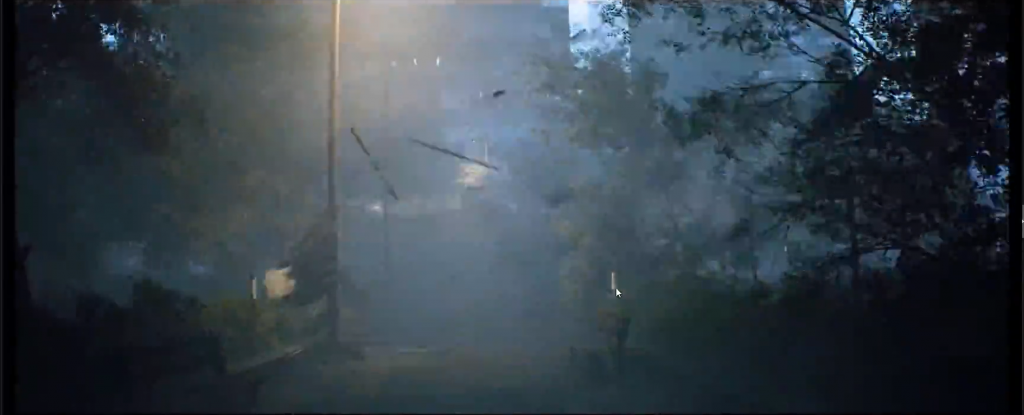
Main Reference
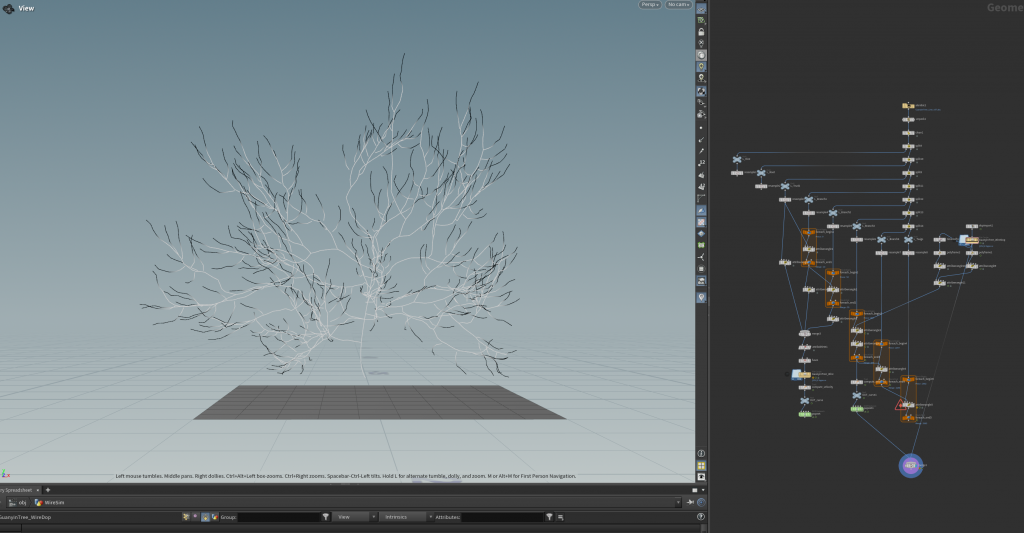
Wire calculation in Houdini
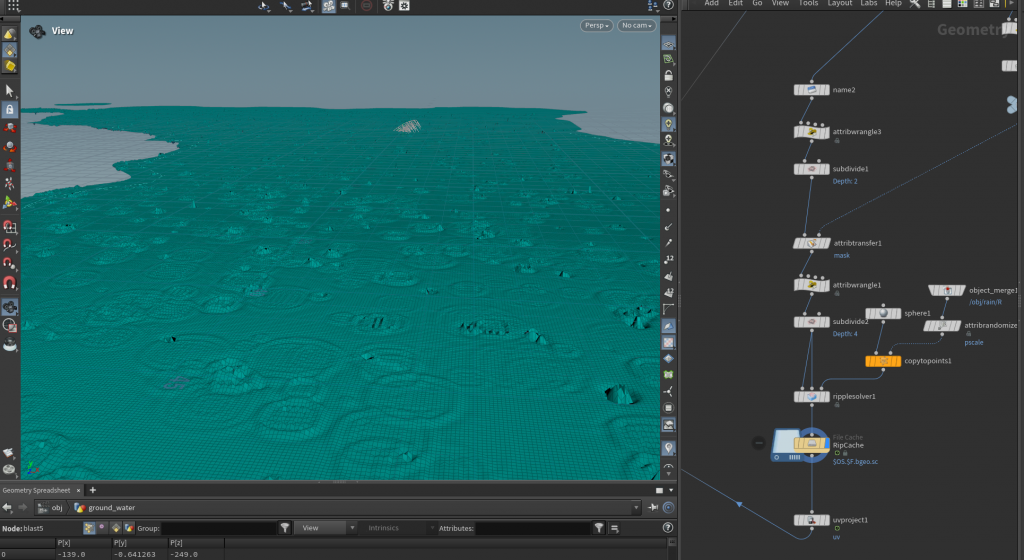
Wave simulation of lake surfaces in Houdini
The dynamic movement of trees after their simulation in Houdini
Final Compositing
Once the simulations and renders were exported, the Summer night storm scene entered the Nuke compositing stage. I separated the render outputs into multiple passes, including diffuse, specular, emission for lightning, rain particles, vegetation motion blur, and volume lighting. This workflow allowed me to refine each layer individually without needing to re-render heavy simulations in Houdini.
My first step in Nuke was balancing the scene’s overall visibility. Night scenes are prone to losing detail, so I carefully graded the shadows and highlights, ensuring the environment remained readable even in low light. The lightning pass was crucial for defining rhythm and atmosphere. I enhanced each lightning strike by adding glow, optical dispersion, and brief exposure spikes, making the flashes feel powerful and unpredictable.
Rain was further layered using 2D particle streaks and depth-based defocus, adding density and realism. I also introduced subtle drifting mist in the midground to strengthen the sense of stormy humidity. To sell the intensity of wind, I added directional blur and jitter to certain vegetation passes, synchronizing the movement with the timing of the gusts.
Color grading was the final step. I pushed the palette toward deep blues and cool tones while preserving the brightness of the lightning highlights. Through multiple iterations, I achieved a balance between chaos and clarity — ensuring the storm felt violent and cinematic without overwhelming the viewer. The result is a cohesive, atmospheric summer night scene that fully expresses the power and unpredictability of nature.
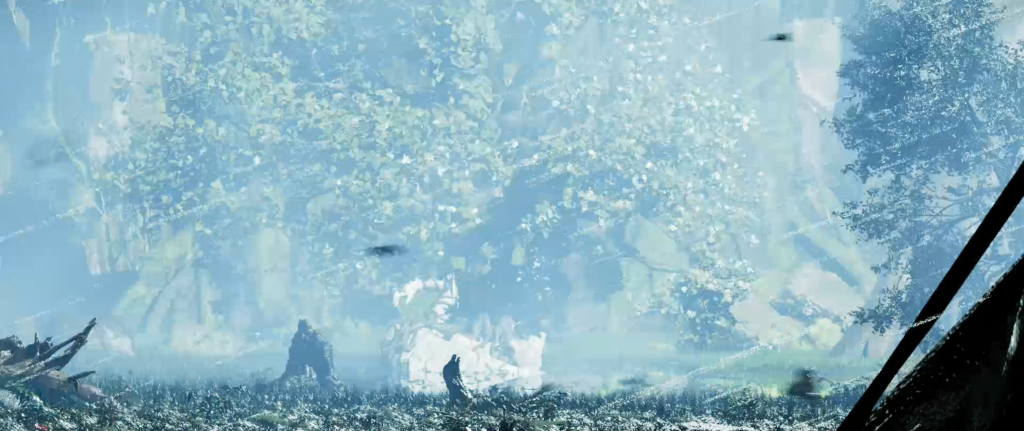
Final Effect
AUTUME
Houdini Stage
The Autumn scene focused heavily on redefining the look of the environment through material development and color design. After importing the base layout from the Spring scene, I began rebuilding the shaders to match the warm, nostalgic tone of late autumn. The primary challenge came from translating the foliage into a believable seasonal palette. Instead of simply recoloring the textures, I adjusted the material networks inside Houdini to introduce variation in hue, saturation, and translucency, ensuring the leaves felt naturally aged, dry, and slightly brittle.
I introduced procedural masks that controlled color breakup, allowing individual leaves to shift from green to orange, red, and finally brown. This gave the forest a layered sense of transition rather than a uniform color shift. The tree trunks and rocks were also reworked with rougher displacement and desaturated tones to push the mood toward a colder, quieter season.
Lighting and lookdev played an equally crucial role. Using golden-hour sunlight, I crafted long, soft shadows to highlight the warm contrast of foliage. During rendering, I split the outputs into multiple passes specifically to maximize control during grading. In Nuke, I enhanced the autumn palette by pushing warm midtones while keeping the shadows relatively neutral, preventing the image from becoming overly orange. By combining material rework, procedural masks, and careful color grading, the Autumn scene achieved a cinematic, melancholic atmosphere that bridges the emotional shift from Summer’s violence to Winter’s stillness.

Main Reference
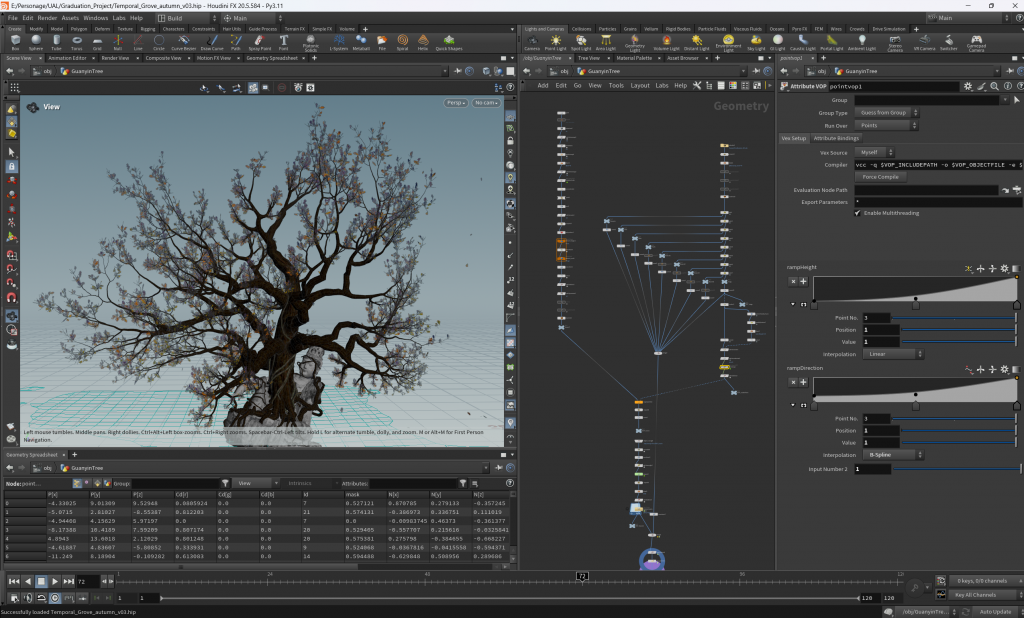
Control the coloring, types and arrangement of leaves through a programmed approach in Houdini
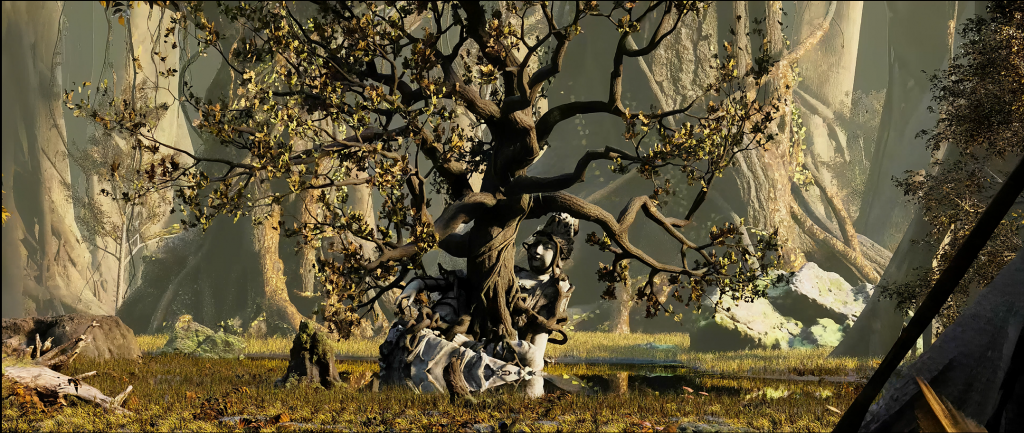
Final Effect
WINTER
Houdini Stage
The Winter scene posed a unique technical challenge: transforming the environment into a cold, snow-covered landscape using a procedural approach rather than manually painting textures. The goal was to create a system that allowed snow to naturally accumulate on surfaces while respecting slope, height, and exposure — all driven procedurally in Houdini’s shading network.
I began by building a custom snow material using curvature, normal direction, and ambient occlusion data to determine where snow should settle. Flat surfaces and upward-facing polygons accumulated thicker layers, while steep or vertical surfaces received thinner coverage. A noise-driven mask introduced irregular breakup, preventing the snow from looking too clean or artificial. Additionally, I created a second material layer for frozen surfaces, adding subtle glossiness and roughness variation to simulate thin ice.
The vegetation required more attention: instead of fully replacing leaf textures, I blended a frost shader on top of the existing materials, using point attributes to control how snow formed on different branches. This allowed for delicate crystals on fine twigs and heavier accumulation on thicker limbs.
Lighting was kept soft and diffused to mimic overcast winter skies, which helped integrate the snow material seamlessly. During rendering, I generated IDs and masks to finely tune brightness and cold tones in compositing. In Nuke, I enhanced the snowy atmosphere by adding volumetric haze and subtly shifting the color palette toward cool blues.
The procedural workflow not only made the Winter scene efficient to iterate on but also ensured that every object in the environment responded naturally to the season’s transformation.
Main Reference

Programmed normal line detection: Generate snow on the surface pointing upwards of the normal line in Houdini
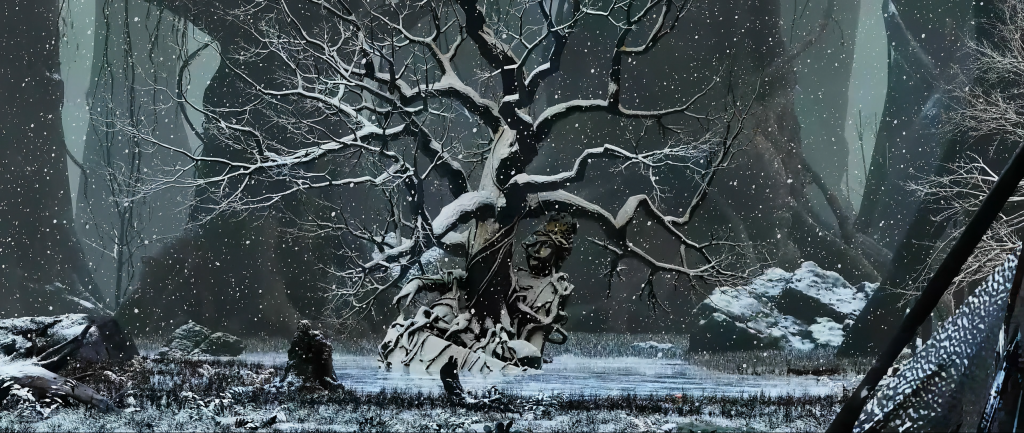
Final Effect
Concept Recalibration & Reflection (Revised with AI Considerations)
At the beginning of this project, my intention was to treat it primarily as an environment art showcase. The video itself was meant to function merely as a presentation medium rather than a narrative-driven short film. Because of this focus, I did not create a storyboard or script during the early development stage. My priority was to craft detailed seasonal environments and let the camera simply guide the viewer through the space.
However, once I completed the core shots, I realized that the overall visual rhythm and viewing experience were not as strong as I had hoped. The transitions felt abrupt, and the flow lacked emotional continuity. To address this, I decided to expand the sequence by adding several new shots — without altering the original pre-rendered camera paths. Instead of forcing a traditional storyline onto the footage, I shifted toward a more atmospheric, exhibition-like structure.
This change allowed the project to breathe. By focusing on visual progression rather than plot, the piece retains its identity as a scene showcase while offering a smoother, more curated viewing experience. Ultimately, this decision helped the final work achieve a clearer artistic intention: presenting the environments not as narrative fragments, but as evolving spaces shaped by time, mood, and seasonal transformation.

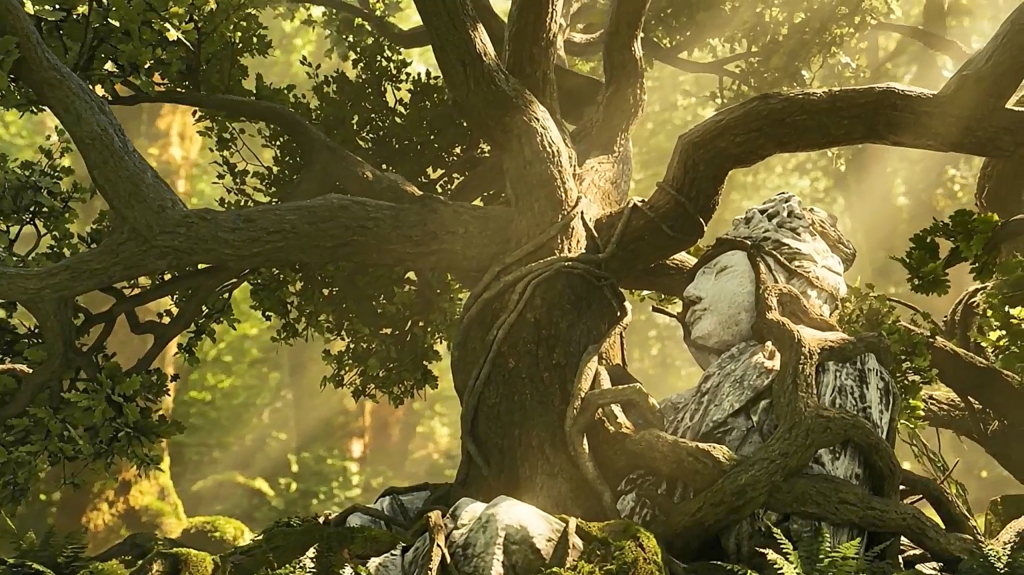
A group of shots that were used by AI
Reflecting on the production of this four-season environment, I realized that the project became a journey of balancing artistic ambition, technical constraints, and — increasingly — the role of AI in a modern VFX pipeline. From the beginning, I faced constant challenges: heavy SpeedTree models, leaf export failures, unstable large-scale rendering, and unexpected simulation issues. Each obstacle pushed me toward alternative solutions, teaching me that adaptability is just as essential as technical skill.
A major shift occurred when deadlines approached and I had to reconsider how I used my time. For several shots, the renders from Houdini were simply too low-resolution due to hardware limits. Instead of abandoning the shots, I used Topaz to upscale them, recovering detail without the need for long re-renders. More importantly, I developed a hybrid method: rendering only the foreground and main subject in Houdini, while generating the background separately with AI. This approach drastically improved efficiency while still allowing me to maintain creative control over composition, lighting intent, and thematic consistency.
However, this also sparked deeper reflection. AI accelerates production, but it forces me to think carefully about authorship, craftsmanship, and where to draw boundaries. I realized that AI works best not as a replacement but as an extension — a tool to support human vision, not define it. The key is intention: knowing what to automate and what must remain handcrafted.
Artistically, the project still centers on storytelling through seasons — Spring’s softness, Summer’s violence, Autumn’s melancholy, Winter’s stillness — but now it also reflects a broader understanding of how traditional VFX and emerging AI processes can coexist. Ultimately, this project strengthened both my technical resilience and my awareness of the evolving creative landscape I’m entering as a VFX artist.
Leave a Reply